Aeroplane: Cuckoo - non-professional aircraft
aeroplane
|
|
Span
|
|
|
Length
|
|
|
Take-off weight
|
|
|
Maximum speed
|
|
|
Ceiling
|
|
| Range |
|
|
Armament
|
|
Powerplant
:
|
|
He is a non-professional aircraft designer. By the end of Sixties when he worked at the Gliding Centre in Leszono, he demonstrated in-flight, the Polish glider constructions in Sweden and got in contacts with the Swedish pilots.
After return to Poland, because of his persecutions by the Secret Service he decided to leave the Polish People’s Republic. As he had no chances to obtain passport and leave the country in an “official” way, either he didn’t like to steal an airplane from the aero-club, he decided to build his own machine to defect from Poland..
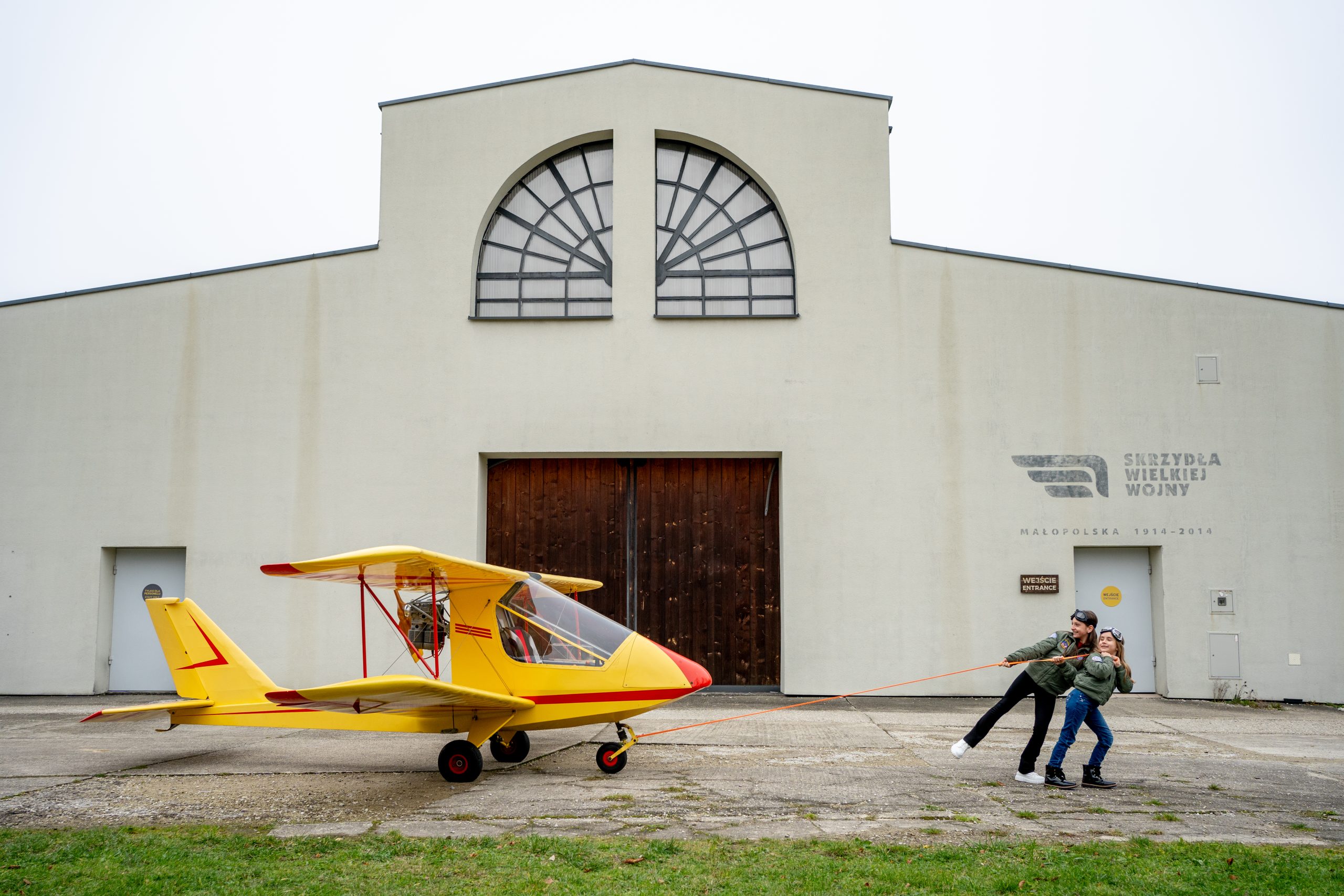
The basic aircraft’s concept based on the British, experimental single-seater, the Turbulent. Components of the Pieniążek’s construction consisted of the crashed SZD-8 Jaskółka glider modified wings and cockpit canopy , the SZD-24 Foka glider tail section, the SZD-31 Zefir’s glider joystick and the Continental A-65 and landing gear from the Piper Cub airplane.
Building the aircraft took place mostly in Pieniążek’s flat on a block’s third floor in a room of 8 m2.The ready built components (as they were too long to be taken out through the staircase) were then lowered on a line through the window. The final assembly took place on the Leszno airfield. The airplane’s name: the Cuckoo, was suggested by then seven years old daughter Iza. The airplane was first flown in spring 1971 and as the first Polish experimental airplane received the SP-PHN registration. Some months in 1971 Eugeniusz Pieniążek flying his Cuckoo, made demonstration flights over Poland, training some 44 pilot, including 5 lady-pilots
In the morning on September 13, 1971, Pieniążek flew his Cuckoo on route from Bielsko-Biala to Krosno. He supposed to return afternoon the same day. After take –off for returned flight to Bielsko, after a few kilometers he turned south and after three hours, low altitude flight in a thunderstorm and flooded rain over Czechoslovakia and Hungary, having serious problem with the engine’s seizure threat, because of low oil low pressure he happily landed in Subotica, Yougoslavia. In Poland he was considered as missing.
In Yougoslavia he spent 7 months in jail (learning in the meantime the Serbo-Kroatian language) . Later, he was pardoned and allowed to cross illegally the Austrian border. From there, in 1972, he came to Sweden, where he settled down as an emigrant, receiving the Swedish citizenship (still keeping the Polish one). With the help of his Swedish colleges, he brought to Sweden his wife and daughter. To make it legal, one of the Swedes “married” his wife. In 1973 Mr and Ms Pieniążek made a sentimental journey back to Subotica, to bring back Cuckoo to Sweden. Initially, the Yugoslavians didn’t agree to give her back, finally they returned her after receiving 1200 dollars for storing the airplane, paid them by Pieniążek. For that money the Yugoslavians made a heavy boozing party. The Cuckoo was then towed behind the VW Beetle with the wings placed on a roof a the car.
After arriving to Sweden, the Cuckoo was stored for 17 years in hangar in Eskillstuna.
In 1990 she was brought back to flying condition. After some time however, it became evident, that change of an engine and undercarriage became necessary. The old powerplant was replaced with the more powerful Continental A-90 engine and the landing gear struts were made of laminate. For some years the Cuckoo flew over Sweden. The engine appeared to be defective and Pieniążek had to buy the new one. In 1993, he shipped the airplane to Poland and in 1996, registered her again in Poland, initially with the SP-FKU markings. Later, the registration was changed to the original one: the SP-PHN. In 2005, the Polish television station TVN, made documentary serial titled: “The Great Escapes”, dedicated to the famous defections from the communist Poland. One of the parts told about the Pieniążek’s escape on the Cuckoo.
On September 13, 2005, commemorating the 34th anniversary of his flight to Yugoslavia, Eugeniusz Pieniążek handed over the Cuckoo to the Polish Aviation Museum collection in Krakow. Unfortunately, bad weather made impossible landing on the museum’s historical runway at Rakowice-Czyżyny. Instead, the ceremony took place on the airfield of the Krakow Aeroclub at Pobiednik Wielki.
On June 25, 2006, during the III Malopolski Air Show, test pilot Bogusław Mrozek rebased the airplane to the Museum.
At the beginning of Nineties, Pieniążek established the No 991 Experimental Aviation Association and started to build the Bucker Jungmann flying replicas. He initiated also building of the RWD-5 flying replica- the Polish sport plane.
Back